

Many homeowners today use security cameras, alarms, and other modern devices to protect their property. But long before these tools existed, people relied on something much more loyal and dependable—dogs. For centuries, dogs have protected homes, farms, and families. Their natural instincts, strong senses, and loyalty make them excellent protectors. Today, some people search for a k-9 guard dog for sale because they want a trained dog that can help keep their home safe. However, whether you buy a trained guard dog for sale or train your own pet, it is important to understand the process, responsibility, and care that come with owning a guard dog.
Training a dog to guard your home takes time, patience, and the right approach. Not every dog is suited for this role, and proper training is important to make sure the dog remains safe, controlled, and dependable. This guide explains the basic steps and important things to consider when raising and training a dog to become a guard dog.
Choosing the Right Dog for Guard Training
Understanding Which Dogs Work Best
Not every dog has the personality or natural traits needed to become a guard dog. Some breeds are naturally more alert, protective, and eager to learn commands. Dogs that are intelligent, loyal, and confident often do well in guard roles.
Working breeds are commonly chosen because they enjoy having a task to do. These dogs usually have strong protective instincts and can respond well to training. However, breed alone does not decide everything. A dog’s personality, energy level, and willingness to learn also play a big role.
Even if you find a k-9 guard dog for sale, it is still important to understand the dog’s background, temperament, and training level before bringing it home.
Considering Your Lifestyle and Family
Before turning your dog into a guard dog, think carefully about your home environment. Guard dogs require regular training, daily exercise, and mental stimulation. Without enough activity, they may become bored or develop unwanted behavior.
Families with young children should also be careful. A well-trained dog can learn the difference between a guest and a real threat, but mistakes can happen if the dog is not trained properly. A dog that becomes too protective might react strongly to visitors or strangers.
If you prefer a playful, relaxed pet that greets everyone happily, a guard dog might not be the best choice. Guard dogs are loyal and loving with their families, but they are often more watchful and serious around strangers.
Step-by-Step Guard Dog Training
Start With Basic Obedience
The first and most important step is basic obedience training. Every dog should understand simple commands such as:
- Sit
- Come
- Stay
- Leave it
- Heel
These commands create a strong foundation for all other training. They also help build trust between you and your dog. A guard dog must listen to commands quickly and reliably.
One important skill is recall, which means the dog comes back to you when called. This skill should work even when there are distractions like food, people, or other animals nearby. The best way to teach this is through positive rewards such as treats, toys, or praise.
Start training in a quiet space and slowly add distractions as your dog improves. Short daily practice sessions help your dog learn faster and remember commands better.
Socialization and Confidence Building
Many people think guard dogs should avoid strangers, but the opposite is true. A good guard dog must be calm and confident around people. Socialization helps your dog learn what normal behavior looks like.
Take your dog on regular walks where it can see people, hear different sounds, and observe everyday activity. Allow safe interactions with other dogs and friendly strangers. This teaches the dog that not every new person is a threat.
The goal is not to make your dog overly friendly with everyone, but to help it stay calm and confident in different situations.
Teaching the Bark Command
One of the safest ways for a dog to protect your home is by barking loudly when something seems unusual. A strong bark can scare away many intruders without any physical contact.
To teach this behavior, first find something that naturally makes your dog bark. This might be a knock on the door, the sound of a doorbell, or holding a toy just out of reach.
When your dog starts to bark, say a command word such as “speak.” When the dog barks after hearing the command, reward it with a treat. After repeating this several times, the dog will begin to connect the command with the action.
It is also helpful to teach a “quiet” command so the dog knows when to stop barking.
Teaching Your Dog to Guard Its Territory
Guard dogs need to understand the area they are responsible for protecting. Walk your dog around the edges of your yard or property regularly. This helps the dog recognize the space as its territory.
You can do this during daily walks or training sessions. Over time, the dog will learn that this area belongs to its family and should be protected.
Consistency is important. Use the same paths and routines so the dog clearly understands the boundaries.
Practicing Stranger Situations
Once your dog understands barking commands and its territory, you can practice guard situations. Ask a friend or helper to act like a stranger approaching your home. This person might knock on the door or walk toward the gate.
When your dog barks to alert you, reward it. The helper should step away or leave, showing the dog that its warning worked.
Repeat this exercise several times so the dog learns the correct response. Over time, the dog will naturally alert you whenever someone approaches the property.
Avoid Training Aggressive Attacks
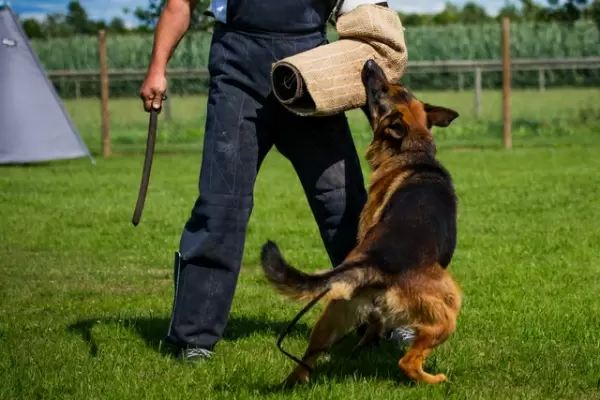
Some people imagine guard dogs biting or attacking intruders. While attack-trained dogs do exist, this type of training should only be done by professionals. It carries serious risks and legal responsibilities.
Dogs trained to bite can accidentally harm the wrong person, such as a visitor or delivery worker. Because of this, many experts recommend focusing on alert barking instead of attack training.
A loud, confident bark is often enough to discourage unwanted visitors.
Final Thoughts
Guard dogs have protected homes and families for generations. With proper training, they can provide security, companionship, and peace of mind. However, turning a pet into a guard dog requires time, patience, and responsibility.
If you are considering a k-9 guard dog for sale or thinking about training your own dog, remember that obedience, socialization, and positive training methods are the key to success. Not every dog will become a perfect guard dog, and that is completely okay. Even if your dog does not become a full protector, it will still be a loyal companion who brings comfort and joy to your home.
